Blue Circle: Empowering communities to clean oceans
Plastic waste in our oceans has long been a daunting global challenge. Marine debris is difficult to retrieve once adrift at sea, and even when collected, the cost to process ocean plastics is much higher than land-based plastics.
For years, fishermen and coastal communities lacked incentives or systems to bring back waste – discarded fishing nets, plastic bottles and oily waste often ended up dumped or burned, leading to low recycling rates and persistent pollution. Moreover, companies seeking to use recycled ocean plastic faced a trust barrier: how to verify that material labeled “ocean plastic” really came from the sea? The ocean plastic economy was caught in a vicious cycle – waste remained in the ocean because no reliable, affordable way existed to collect it and prove its origin.
By the late 2010s, this problem was especially acute along China’s vast coastline. The situation called for an innovative solution that could motivate people on the ground to take action, while ensuring their efforts translated into verifiable, marketable results. Blue Circle was born out of this necessity to connect coastal communities, innovative technology and global markets in a unified fight against ocean pollution.
The Blockchain Solution
Blue Circle emerged in Zhejiang in 2019 as a marine waste management initiative combining community action with blockchain technology. Its approach is simple in concept but ambitious in scope: empower local fishermen and residents to collect marine waste, and use Ethereum-based blockchain tracking to certify the entire journey of that waste from seas to shelves. As Blue Circle's Industry Policy Expert, Ivan Zhou, explains: “We use the Internet of Things, big data, and blockchain technology to build a platform. We use this platform to mobilise local residents and fishermen to help us collect waste from boats and beaches”. In practice, the Blue Circle model has several key components:
- Community Collection Points (Little Blue Homes)
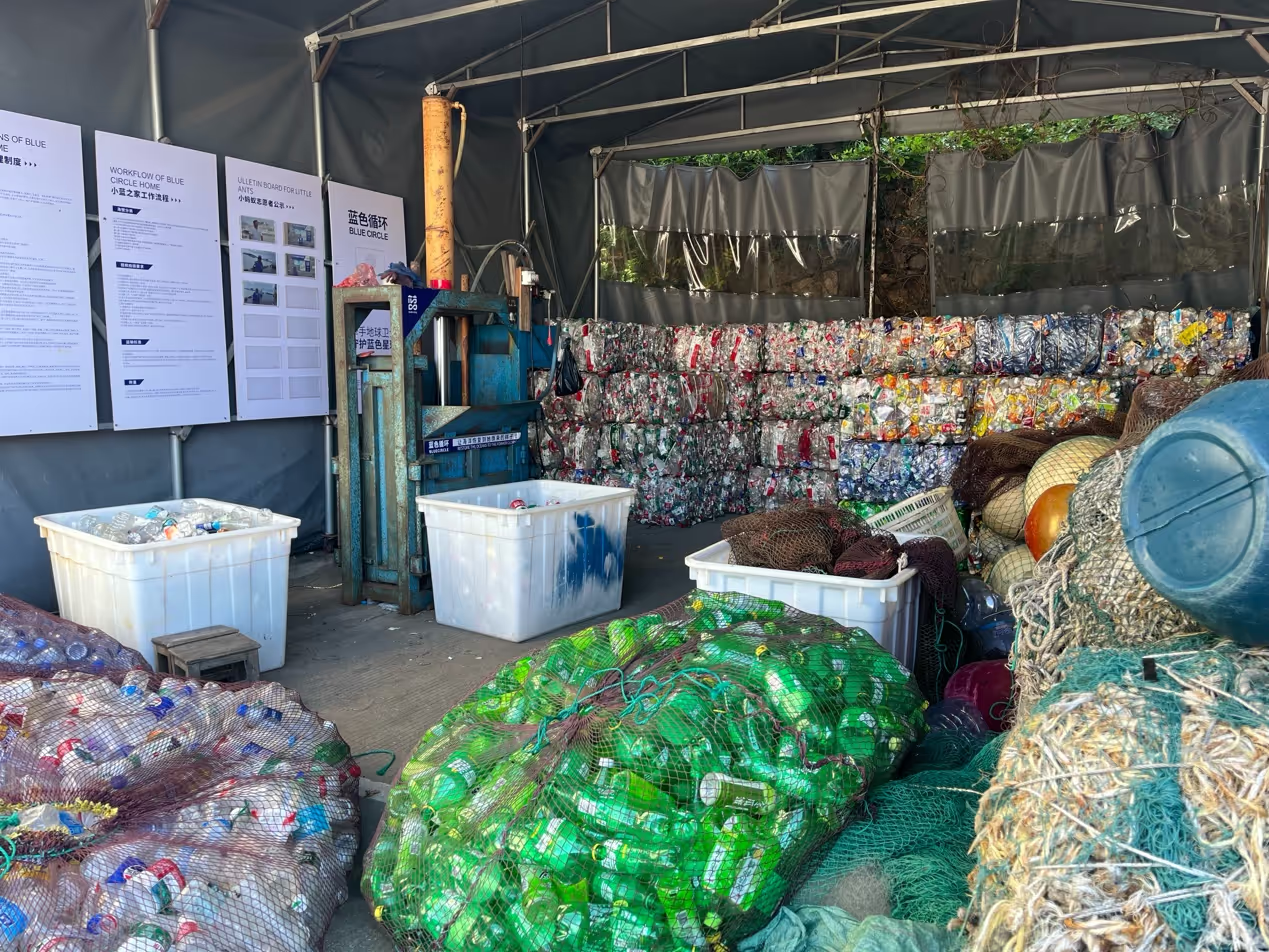
Blue Circle mobilises fishermen, retirees and fishermen’s wives to steward village collection sites. In Taizhou, for example, the backyard of an elderly ex-fisherman serves as a mini station where neighbours weigh and sort beach plastics and discarded nets. With training, smart scales and QR-coded bags, each batch is logged into the system.
- Ocean Cloud Warehouse (OCW)
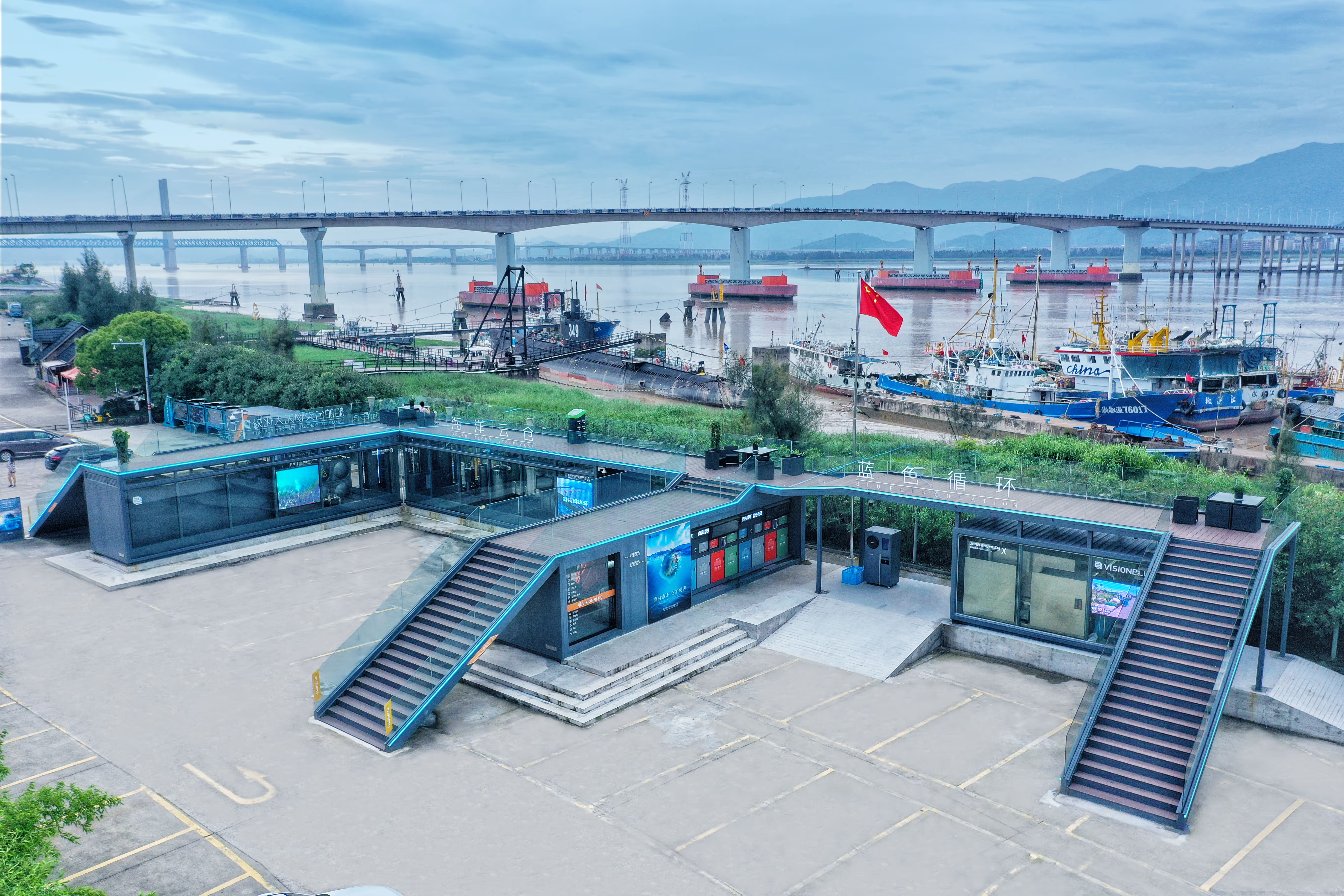
At major ports, Blue Circle’s OCW units act as intelligent receptacles for pollutants and trash carried by ships. Equipped with dedicated treatment modules, the OCW separates oil from water, while sensors separate oil from water, measure waste and upload volume, weight and origin in real time, giving vessels a simple, auditable way to offload waste while deterring illegal dumping.
- IoT and Big Data Platform
GPS trackers, electronic scales and CCTV record who collected what, when, where and how much, down to each individual bag. Trucks travelling to recycling plants are GPS-tracked too. All data flows to an Ocean Big Data platform, which provides a real-time overview of waste collection across the coast.
- Blockchain Traceability
Every digital waybill generated by the Internet of Things (IoT) is permanently recorded on a consortium blockchain built on Ethereum, creating an immutable chain of custody from drop-off to remanufacture. Buyers and consumers can scan a code on the final product to verify its ocean origin. As Ivan explains, “Blockchain is very important... We use it to make the entire life cycle traceable and certified, from the ocean to the factory to the shelf.”
Blue Circle's recycling plants (Ocean Factory No.1) process 30,000 tons of waste per year. Plastic waste is cleaned and converted into pellets. Other materials are filtered and treated, and hazardous residues are disposed of safely. The recycled plastic pellets are then sold to manufacturing partners to make new products. Ivan describes the process: "We send the waste plastics into the factory to clean and regenerate the plastic. We sell them to our clients to make other high-value products, including clothes, vehicle accessories and electrical products." Revenues from the premium on these sales are partly shared back with the front-end collectors. Ivan says: "When we earn the premium, we share it with the local residents. This becomes a loop, a circular economy."
Monitoring & Evaluation Approach
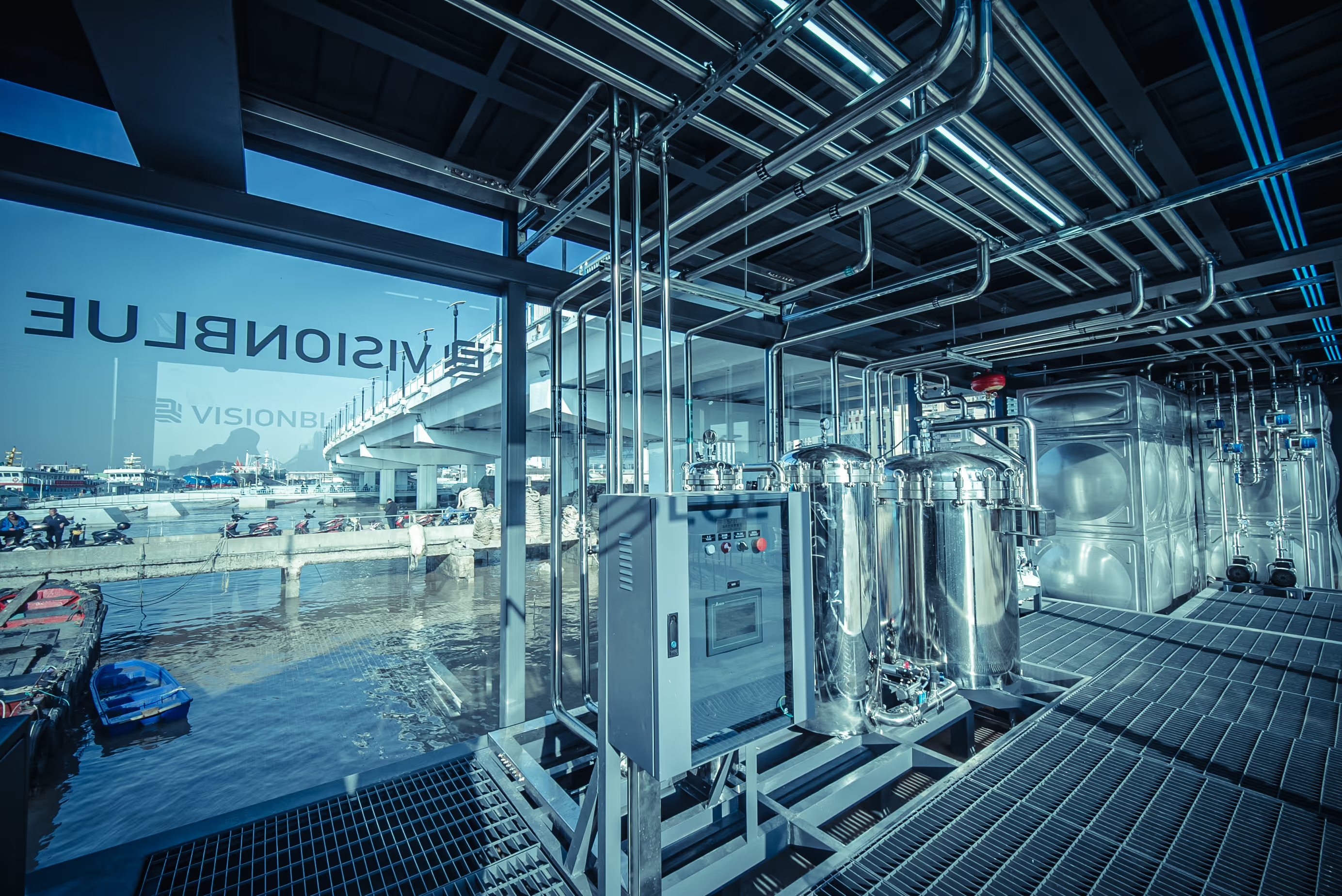
From day one, Blue Circle built monitoring and evaluation into the fabric of its operations, harnessing its data-driven platform to measure impact. Every piece of waste collected is a data point. The project’s IoT sensors and blockchain ledger together form a robust M&E system that tracks outputs in real time:
- Automated Data Collection
When a fisher deposits a bundle of discarded nets at an OCW station, for example, the system uses an electronic scale to record the net’s weight and tags the entry with the collector’s ID and location. Cameras capture the transaction as a short video clip. All this information is packaged as a 'minimum unit dataset' and automatically uploaded to Blue Circle's cloud platform.
- Real-time, Auditable Dashboard
Data is written to the blockchain instantly, creating a dashboard for managers and stakeholders in real-time. Staff can see totals of waste gathered across sites, broken down by type (plastic, oily waste, etc.), by location, and by time period. This transparent ledger also means third-party evaluators or partners can be granted viewer access to verify claims, which addresses the common M&E challenge of data reliability, especially in remote or distributed projects.
- Quality Control & Anti-Fraud
Smart contracts are embedded across the entire recycling and regeneration process to enforce quality control and prevent fraud. For example, during plastic waste transportation, IoT-enabled electronic scales can only upload data and generate a digital waybill if the collection site’s geolocation, the truck’s GPS signal and the driver’s mobile device all fall within pre-defined physical boundaries – triggering the smart contract condition. Additionally, a credit evaluation model flags anomalies (e.g., implausible volumes or out-of-bounds collections). When such red flags appear, the platform can require extra verification or automatically suspend users/sites, which ensures zero tolerance for fraud and preserves the credibility of Blue Circle’s impact data.
- Feedback Loops
Monitoring data is not just collected for reports, but is actively used to improve operations and optimise logistics. For instance, if certain “Little Blue Home” sites consistently hit capacity, Blue Circle can schedule more frequent pickups or deploy additional OCW units nearby. Data on which types of waste are most common (e.g. fishing nets vs. plastic bottles) informs R&D for recycling. Moreover, local governments receive regular data on pollution reduction, and community members can see the tangible results of their work (often displayed on public bulletin boards or via a mobile app, showing how many tons their village has collected).
Blue Circle’s approach to monitoring and evaluation is embedded in its technology, transforming what could otherwise be a messy and difficult-to-track endeavour into a precisely quantified and transparent operation. This strengthens internal project management and provides outside observers with compelling evidence that the model delivers real, measurable impact for oceans and people.
Results and Impact

In just a few years, Blue Circle has become a national model for marine waste recovery, community empowerment and blockchain-based traceability.
Cleaner coasts, healthier seas
Through 80+ collection sites across 14 coastal cities, the initiative has collected and processed over 19,000 tonnes of marine waste, including thousands of tonnes of plastic. Now, more than 13,000 vessels offload pollutants through Blue Circle’s network rather than dumping them at sea.
Waste to value
By ensuring traceability and quality, Blue Circle transforms ocean plastic into valuable materials which are now purchased by global brands. This premium market for verified ocean plastics increases demand and price, generating more revenue for local collectors and demonstrating the effectiveness of the circular economy.
Livelihoods and dignity
The community model funnels rewards to fishermen, elderly residents and families – an additional income of around 1200 CNY per month (roughly a 20% increase), as well as renewed pride. As of 2025, 1,320 elderly individuals and women are actively involved, and the stated ESG vision is to create 5,000 jobs by 2030 and engage one million people in marine conservation.
Policy traction and scale
Blue Circle earned the UNEP Champions of the Earth award in 2023 and was featured in China’s 2024 State Council as a new model delivering “whole-process visual traceability from seas to shelves”. Backed by supportive policies, the programme is expanding its infrastructure: Ocean Factory No. 1 (36,000 tonnes per year) is operational, and No. 2 (500,000 tonnes per year) is targeting tougher waste streams, such as derelict nets. A network of 283 partner enterprises now underpins the entire chain, from collection to manufacturing.
Perhaps most importantly, Blue Circle has reframed ocean waste as a shared resource and responsibility, proving that protecting the “blue” can power a blue economy by turning once-worthless trash into environmental, social and economic value.
The Human Angle
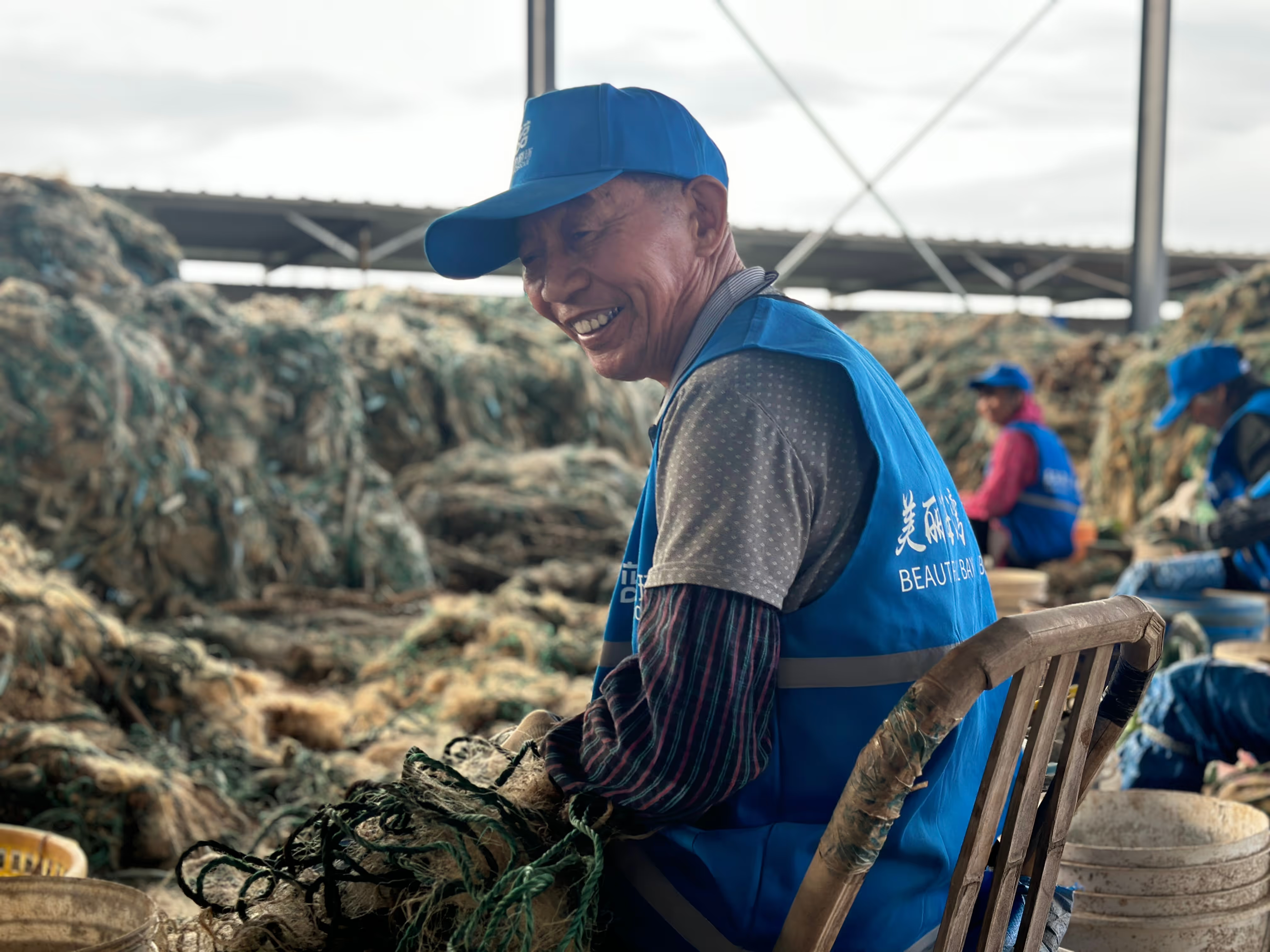
While the numbers and technology are impressive, Blue Circle’s true impact is best understood through the lives it touches. Take the story of Mr. Chen Fanxia, a 73-year-old retired fisherman from a coastal village in Taizhou. Feeling too old for the sea but not ready for an idle retirement, Mr. Chen found a new sense of purpose through Blue Circle.
The project set up a collection point on the beach near his home and used his backyard to store and sort the plastic waste gathered from nearby waters. Now, Mr. Chen and his wife earn around 3,000 CNY per month collecting ocean debris. “The relationship between me and my daughter and grandchildren has improved greatly thanks to the Blue Circle programme,” Mr. Chen told the team, explaining they can now buy toys for their grandchildren with the earnings and no longer need to ask their daughter for money. Once struggling to stay occupied, Mr. Chen has become a proud steward of his local shore. His journey from sidelined retiree to paid ocean guardian is just one of the human stories that give Blue Circle its heart and soul.
Lessons Learned and Replication Potential
Blue Circle’s experience has taught us several key lessons about tackling environmental challenges on a large scale. By proving that all the recycled plastic came from the ocean, Blue Circle was able to access a premium market for “ocean plastic” products. Companies are willing to pay more for materials with a proven positive impact, and this premium is shared with local collectors to ensure the community benefits and remains invested.
Another important lesson is that community engagement is paramount. Blue Circle has turned those most affected by marine litter into part of the solution. Over 10,000 vessels and 200 businesses in Zhejiang now participate, including fishermen and boat crews who collect debris and factories that process recyclable materials. Providing people like Mr. Chen with financial incentives and a sense of purpose has been crucial in overcoming collection and cost barriers. The initiative has also forged strong partnerships with local authorities. City governments have helped to standardise practices, provided support and even purchased clean-up services and handled unrecyclable waste in order to integrate Blue Circle into official programmes.
Ultimately, technology is most effective when it empowers people, coordinates action, and measures progress. However, Blue Circle's success in one province hints at much wider potential, as the initiative is set to inspire similar efforts beyond China. Its combination of transparency, technology and community empowerment could be adopted by coastal communities worldwide.
.avif)